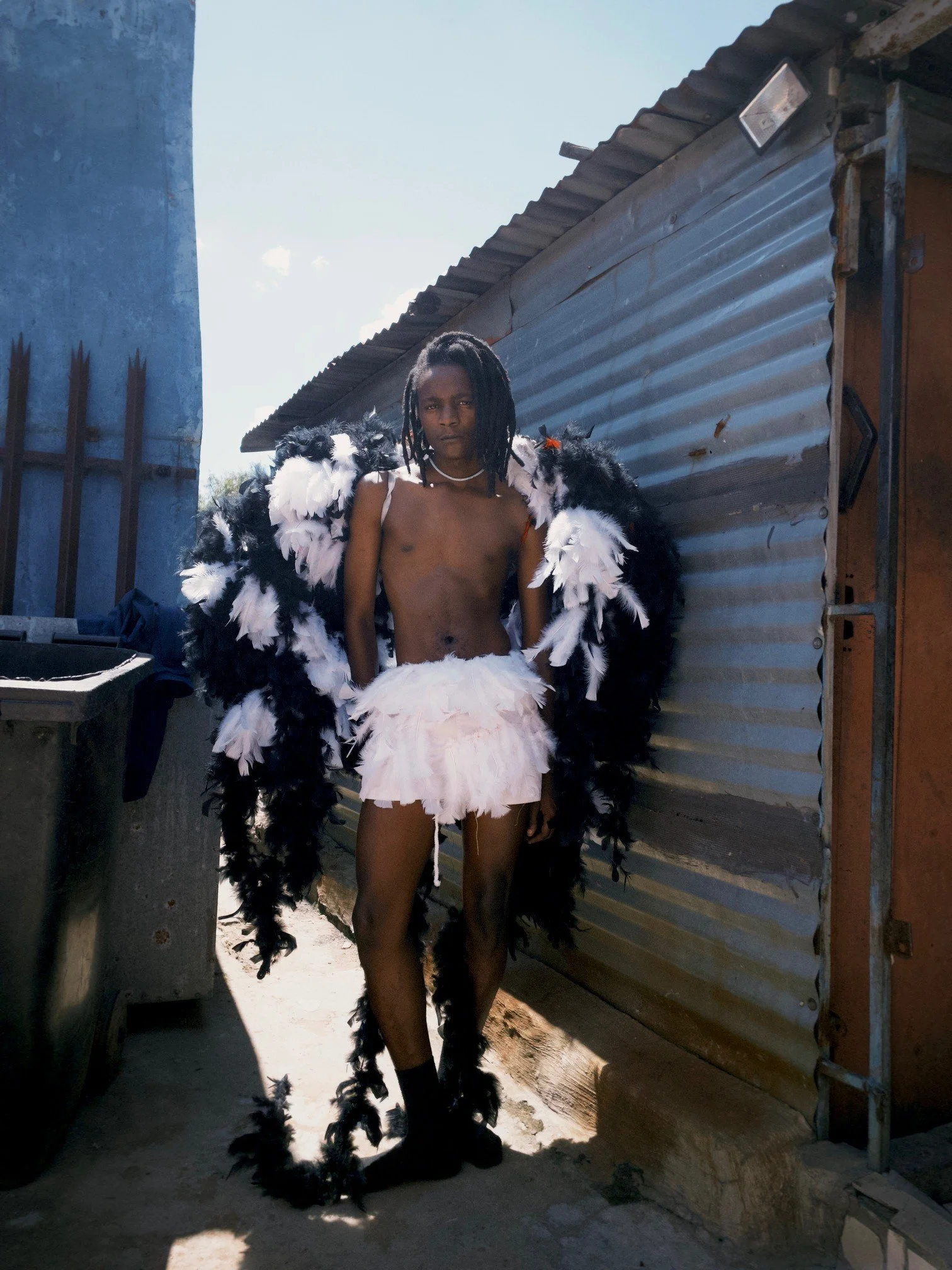
Director Dlamini Isn't Waiting For Permission
Director Dlamini, also known as Ershaw the Rabbi, answers the phone on the third ring. It would be natural to feel intimidated by a man who is not only a director, but also an art designer, stylist, classically trained musician, filmmaker and script writer, to name a few. But within seconds, that intimidation dissolves. Instead it is disarmingly easy to speak to Dlamini, who lets me into his mind and creative process without hesitation for the next hour.
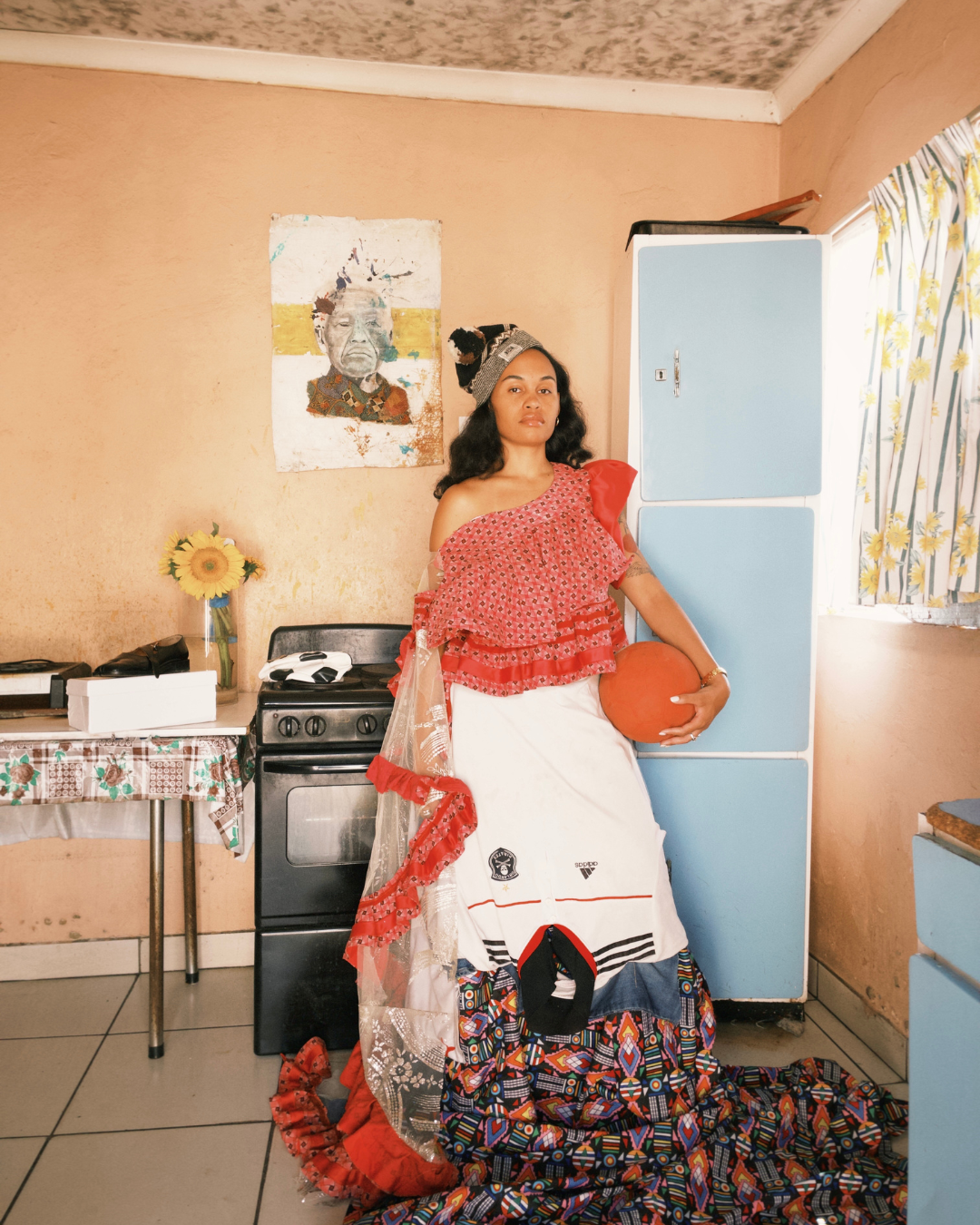
Dlamini is based in Johannesburg, which he describes as a city of contradiction. There is a tension that exists between how far we were supposedly meant to have come as South Africans, and the reality of the everyday, which feels particularly relevant in Gauteng. “It’s 2026, but people are still living in township homes,” he says as we discuss the intentionality behind his work. Dlamini does not shy away from these contradictions, but rather chooses to showcase them in his work. He is a research-led artist, focused primarily on identity (pre- and post-colonial), and one of his goals is to elevate his subjects — “in the most majestic way” — instead of shrinking them. It is clear that one of Dlamini’s gifts is observing people and their environments deeply and then using his findings to create art which evokes something in those who view it.
Growing up in a family embedded with artists, Dlamini began to hone his craft at a young age. Art was something readily available to him, which formed part of his everyday life.
“I’ve been submerged in the Southern African art space because of my mother, my uncles and my grandparents,” he explains.
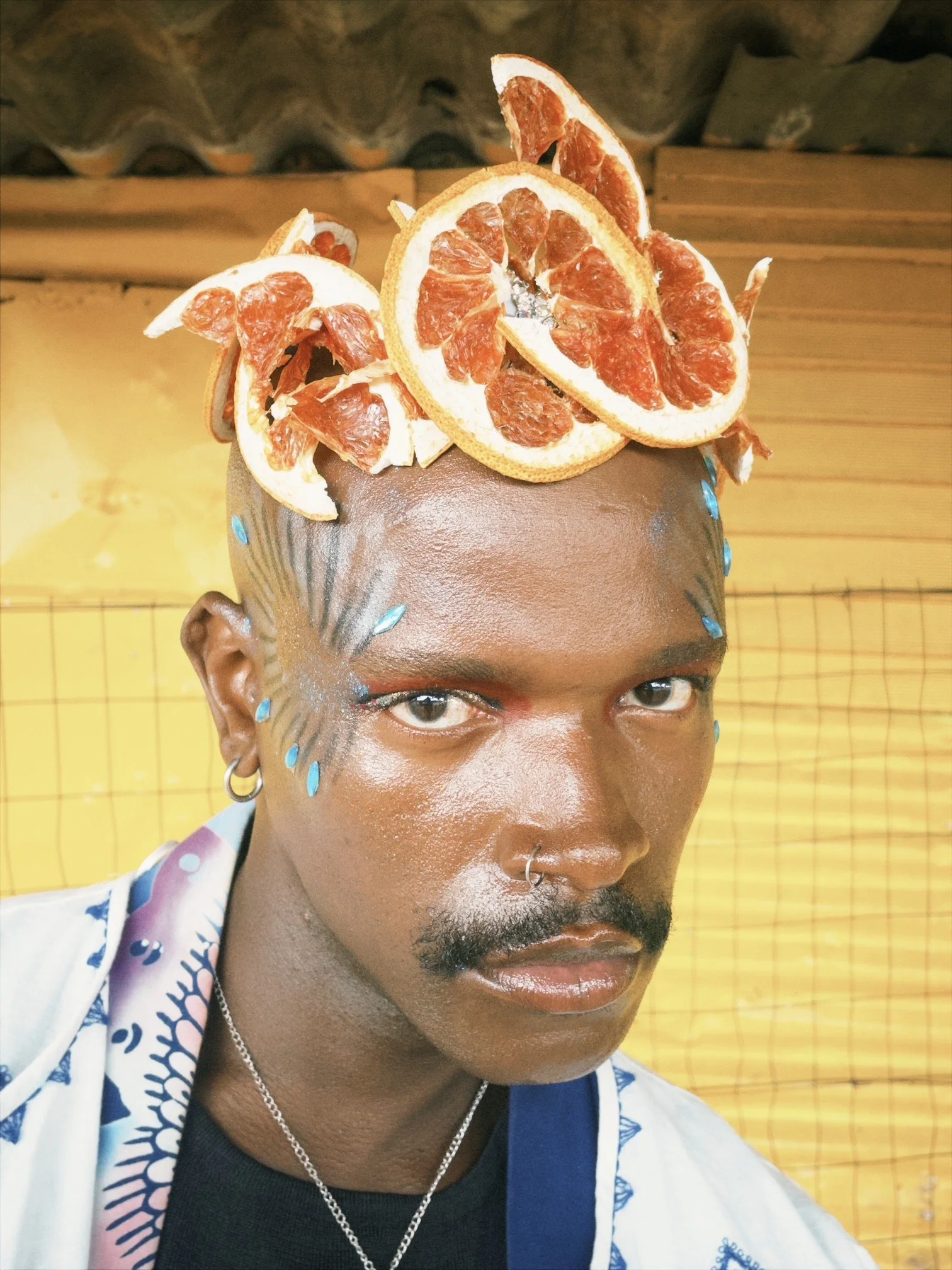
From the time he was 12 years old, Dlamini began a ritual he calls the ‘30 minute rule’ (which I will be stealing moving forward). It is a daily practice, where he spends at least 30 minutes conceptualising, writing or iterating a piece of creative work. Not only is this a ritual, but a form of discipline he has crafted over years. The more you do it, the more you need to do it.
“It becomes like second nature,” he says.
This confirmed something I already suspected to be true about Dlamini: he puts in the work. It is not mere motivation or sporadic moments of creativity he relies on, but structure. I asked him, of all the hats he wears, which feels most fitting. He tells me, “It would be directing… making the overall cohesion… make sense.”
Dlamini describes how his classical music background informs his visuals and being able to “understand… individuals as subjects inside a story.” His training, along with his fascination with hip hop, allowed him to learn all about storytelling through lyricism, which led to his urge to direct. He bestows on art the weighting it deserves, calling hip hop and rap “literature”, referencing people like Donald Glover as inspiration. If it is not already obvious, the multifaceted nature of Dlamini’s interests are the very things which make him a great director. He doesn’t just look at moments, people or things, he sees them, analyses them and then creates intentionally with them in mind.
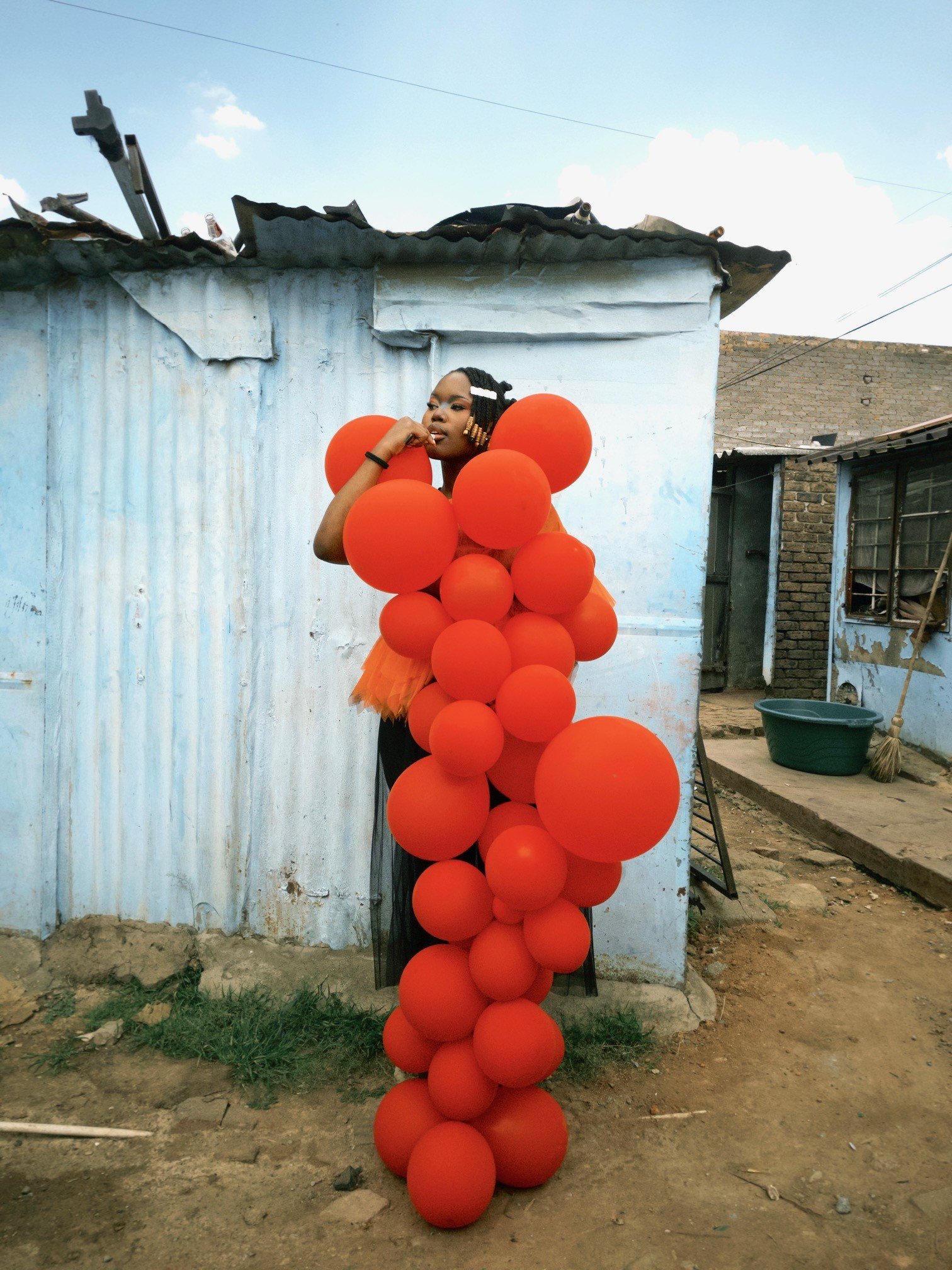
Dlamini has a “do with what you have” mindset. Much of his work, which looks like it is captured on a manual film camera, is shot on his iPhone 12. When he told me this, I asked in disbelief how he made his images look so film-like, to which he answered editing, shooting through film lenses and general resourcefulness. Film, he puts it plainly, is expensive, far too expensive to romanticise. So, if actual film isn’t an option, he makes do with the tools available. There is a clear refusal from Dlamini to wait for ideal conditions to create. If you have the vision and enough people to help make it happen, make it happen. Dlamini described wanting his still images to look like they are on the verge of moving, as if you watched a moment longer, something would change. Which is exactly what his work looks like to me. When you combine the intentionality of the subject matter, the styling, the movement direction and the immediacy of an iPhone shot, you end up with something rather magical.
Dlamini is unsentimental about Johannesburg’s creative scene. While acknowledging it being a powerful hub, he also describes it as one defined by gatekeeping more so than opportunity.
“Johannesburg is a cool creative hub,” he says, “but it is saturated with a whole lot of iron doors, iron gates.”
Access, he suggests, is often determined less by the work itself than by proximity to the right networks: agencies, intermediaries, international connections. South African art is too frequently filtered through European or American approval before it is deemed valuable. This frustration is a structural one. Due to a lack of corporate protection, the South African creative economy is vulnerable to exploitation: a place of extraordinary geography and relatively cheap labour, with few protections for the artists producing the work. And yet, this critique does not veer into cynicism. If anything, it seems to motivate Dlamini to create more and be one of the people who let others through the gates instead of keeping them out.
Recently, around 16 months ago to be exact, the stakes of Dlamini’s life sharpened as he and his partner welcomed their baby girl into the world. It is clear that she already sits quietly in the logic of his decisions, creating an immediacy and reality to the work that perhaps was not there before.
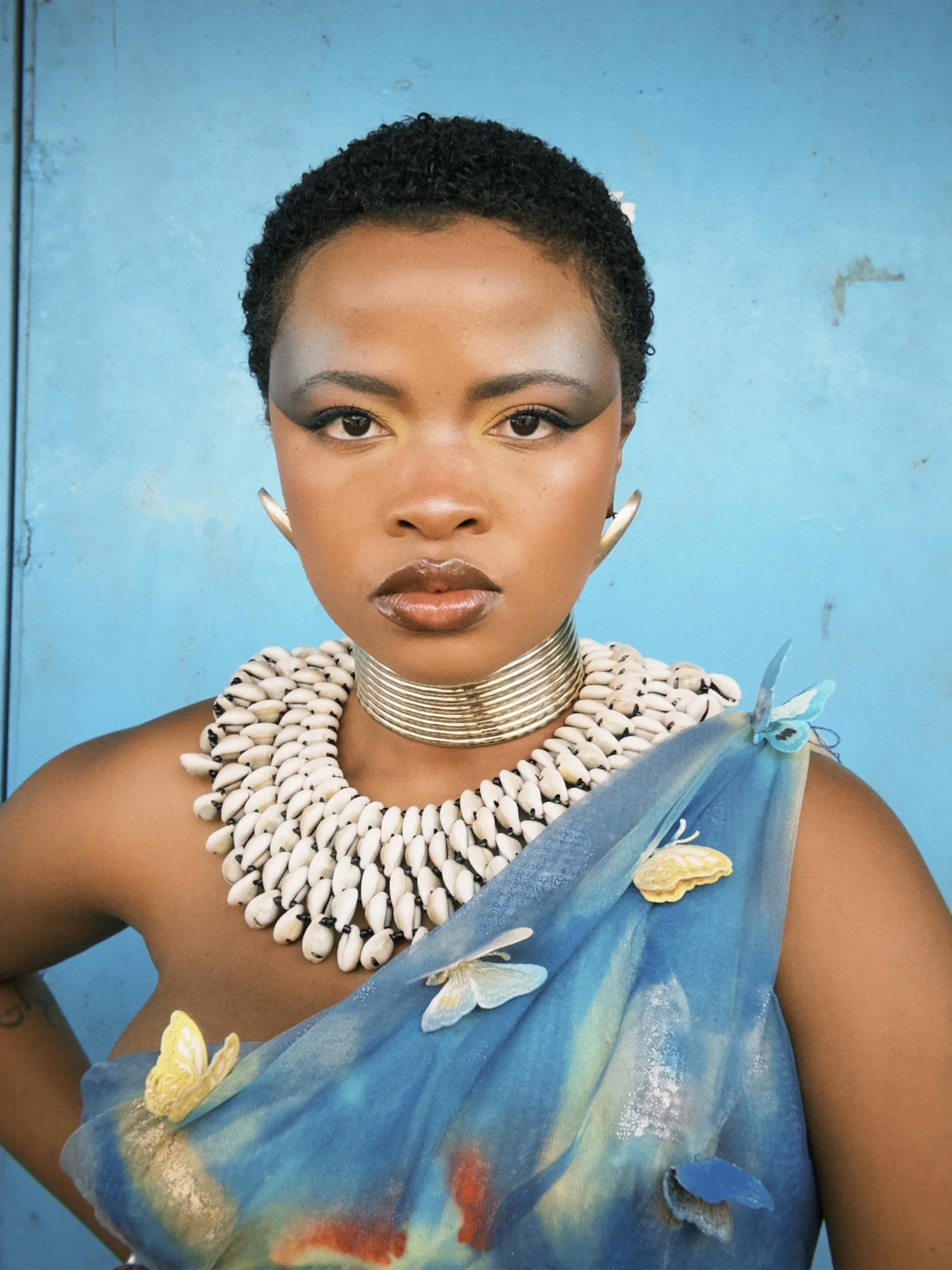
“Some shoots I do with the last cents I have,” he says.
And yet, he resists the narrative that often surrounds that tension. There are no theatrics or performances of struggle to prove artistic legitimacy. If anything, he is critical of young artists who are encouraged to give endlessly, create without return and to accept exposure as payment.
“Do it for money,” he says, bluntly. “Stop listening to the starving artist’s approach.”
Dlamini says this with the confidence of someone who fundamentally understands that creative labour is still labour. For Dlamini, being an artist does not mean rejecting stability entirely, but it does mean refusing to be exploited under the guise of opportunity, which is advice he wants to pay forward to the next generation of creatives coming up behind and alongside him.
He also emphasises the power of not taking yourself too seriously. There is a freedom which comes from being playful, he says. One should try to “have the childish point of living”. Becoming is hard, finding your voice and your style is difficult, which is why Dlamini encourages young creatives to allow for experimentation and the chance to fail without paralysis. What he describes, I believe, is the building of creative resilience, which is something he himself has been perfecting for years. There has to be a willingness to get it wrong but to keep going anyway.
I have rarely met someone to whom creating feels so innate. Merely listening to Dlamini describe his creative process, from conception to completion, felt exhausting, let alone the idea of physically executing it week after week. But it is in his blood.
When I ask if he has ever felt the pressure to work a more traditional 9 to 5, he pauses, sighs, and says, “I just can’t do it. I literally cannot do it to myself.” There is something refreshing about speaking to someone who is doing exactly what they were born to do. I left the call inspired, missing South Africa, and genuinely intrigued to see what Dlamini does next. One thing is certain: he is not waiting for anyone’s permission to start.